Alpaca fleece is hypoallergenic, waterproof and does not get dirty
In the wild, alpacas live from 15-20 years, and under human supervision from 20-25 years
Alpaca births most often occur in the morning. This is a natural process designed for the newborn to have time to adapt to the temperature before the onset of a cold night
The word "alpaca" is not declined by numbers and cases
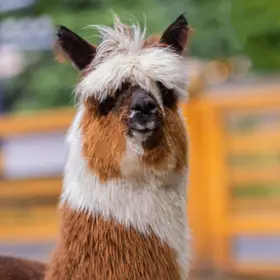
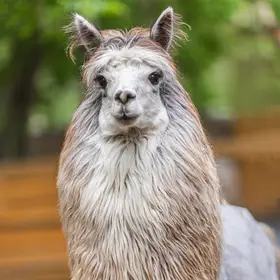
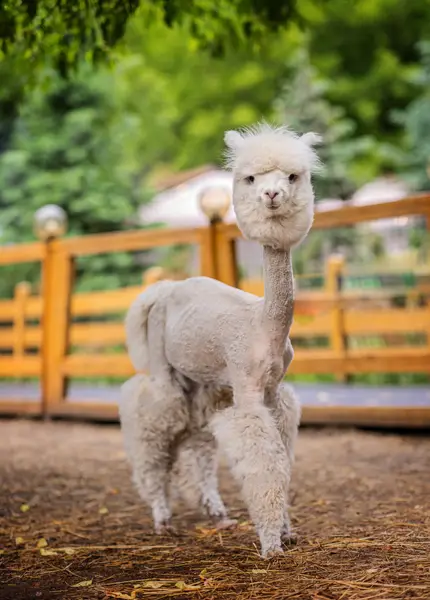
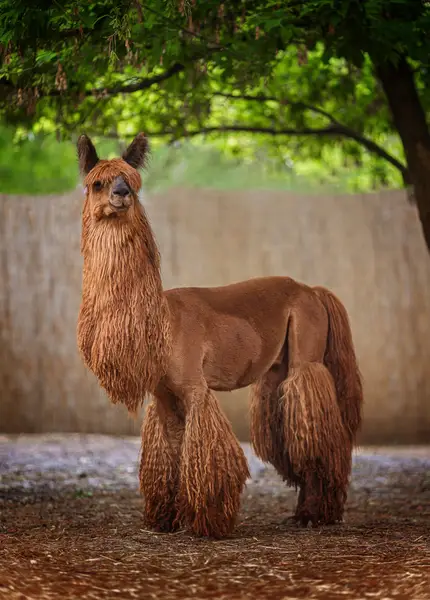
Huacaya is the most numerous and resembles a teddy bear in appearance. Suri alpaca breed has fleece hanging in long dreadlocks
Alpaca ancestors are wild vicuna animals. Alpacas were domesticated about 6000 years ago by Peruvian Indians, mainly for their fleece
Alpacas are sheared once a year, removing 3-5 kg of fleece from one individual. They try to remove moderately and necessarily before summer, because the alpaca can simply freeze
Alpacas almost always give birth to only one baby, twins are extremely rare
Alpacas, like other animals with thick fleece, can experience heat stress in hot weather. Shearing helps them tolerate high temperatures more easily
Alpacas are social animals living in herds. Llamas are independent by nature and can be alone
Alpacas make excellent "lawn mowers". Unlike other animals, they cut grass from the middle of the leaf blade, instead of pulling out the entire root and eating the plant whole. You get a neatly trimmed lawn and a full alpaca. A win-win situation :)
Alpacas do not have hooves. They belong to tylopod animals, whose foot is formed by a soft calloused outgrowth, and these guys walk, relying on toe phalanges with claws
Alpaca teeth grow throughout their life
Alpacas "chat" among themselves in their own language – they hum, snort, make clicks, grumble, squeal to express dissatisfaction and scream in case of danger
Alpacas live in South America, mainly in the highlands of Peru, Bolivia and Chile, at altitudes from 3500 to 5000 meters above sea level
Alpacas are very social animals and have their own organized system
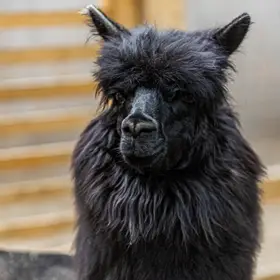
Alpaca fleece has 24 natural shades
Suri alpaca is a rarer breed than Huacaya, making up only about 5% of the total alpaca population. Their fleece is also more expensive than Huacaya fleece, due to rarity and high quality
The first mention of alpacas dates back to 1553, in the book "Chronicle of Peru" by Cieza de Leon it is even accompanied by an image
Alpaca eye color is mainly brown and it is very rare when blue eyes are found
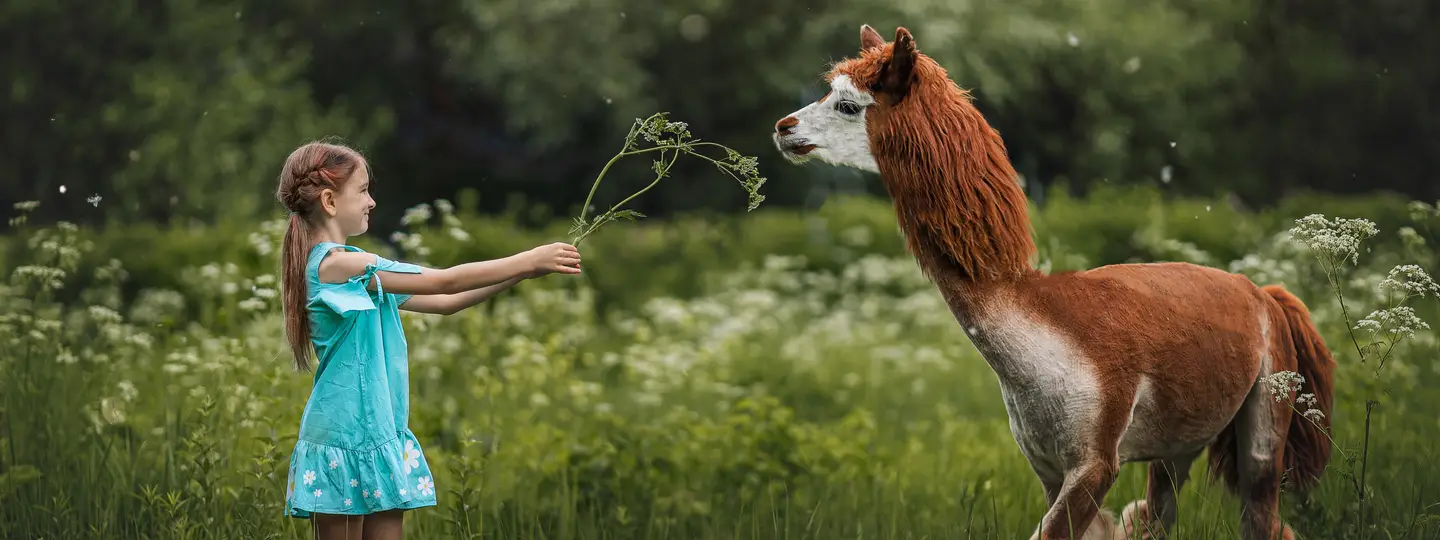
There is such a term as "Alpacotherapy" – this is a technique using communication with alpacas to reduce stress, improve mood and overall human health
Suri is considered a rarer and more valuable breed (number less than 5% of total alpaca population), and its fleece is finer and softer compared to Huacaya
Alpacas and llamas belong to the camel family (Camelidae). Both species, along with ancestors - vicunas and guanacos, are part of the South American group of camels
Almost all alpacas are white
There are about three million alpacas in the world. 80% of them are white, which is easily dyed in other colors. Most of them live in Peru (about 3 million)
Alpaca mother carries the baby for 11 months
Alpacas are usually sheared in spring, before the onset of heat, to keep them comfortable and ensure good fleece quality
Llamas are much larger than alpacas, ears are elongated banana-shaped, and alpacas have short triangular ears, like a spear tip
Ancient inhabitants of Peru believed that alpacas appeared on earth together with the fertility goddess Pachamama and since then have become faithful friends of people
When alpaca teeth grow very long, they need help filing them down, alpaca teeth grow throughout their life
Alpacas have no teeth on the upper jaw. There is only a lower row of teeth
Alpacas communicate using body language, not only among themselves, but also with people. A male can tense his neck and stand sideways to declare his superiority and deter any rivals. They also stomp their feet when irritated, and can raise their ears as a sign of alarm
Alpacas living in the highlands of the Andes are adapted to harsh conditions, where temperature differences between day and night are very large (up to 30 degrees per day)
Usually the strongest and most aggressive male is the herd leader
Alpaca fleece has all the properties of sheep fleece, but is much lighter and warmer by weight
The official alpaca longevity record is 28 years
Thanks to its unique properties, Suri breed fleece is often called "royal" and used in premium-class products
Alpaca is a very sensitive nature and does not tolerate loneliness, so they cannot be kept one at a time - always in pairs, otherwise the alpaca can even die from loneliness
Alpacas have a rectangular pupil to see 180 degrees
Alpacas are much cleaner than other domestic animals, they find a place for the toilet themselves and all go to one certain place
In former times, Suri alpaca fleece was used exclusively for making clothes for royal families and nobility
The origin of the domesticated form – llama (Lama glama) from the wild species – guanaco (Lama guanicoe), and alpaca – from the wild species vicuna has been confirmed
Warm and soft blankets, plaids and clothes, household items are made from alpaca fleece
Alpaca baby gets on its feet and starts walking within 1 hour after birth
Alpaca shearing is a way to obtain valuable fleece, which is valued for its strength, heat insulation and hypoallergenicity
Llamas are significantly larger than alpacas - they can reach a height of 1.8 meters and weigh up to 200 kg, while alpacas usually have a height of about 1 meter and weigh up to 70 kg
Communication with alpacas is useful for people suffering from depression and anxiety disorders. Don't be sad, we have many fluffy antidepressants at our Alpaca Park! :)
Alpacas are not pack animals, like llamas. They are smaller in size and cannot carry heavy loads. They are bred for fleece and beauty :)
Alpacas cut grass with lower incisors, and do not pull it out by the root, like other herbivorous animals
Alpacas mainly communicate using sound. The most common sound is humming. They hum for many reasons, including when they are upset, happy or bored
Alpaca fleece plays a key role in their ability to survive in such conditions. It not only retains heat, but also effectively removes moisture, preventing overheating
Alpacas are very friendly and love communication, they live even in the wild only under human supervision. There are no wild alpacas - this is a domestic animal. Humans domesticated them more than 6 thousand years ago